Agate vs. Jasper vs. Chalcedony: A Visual Guide
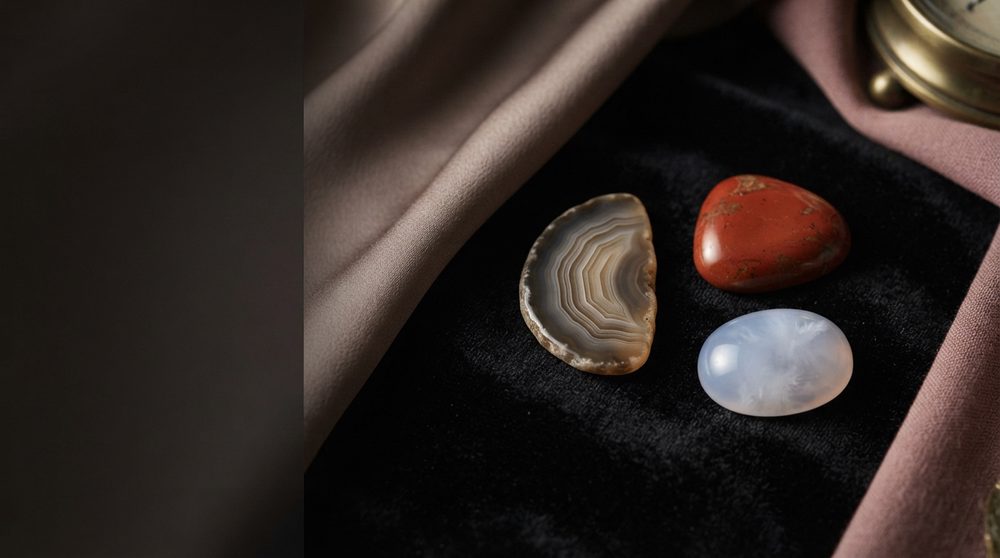
Three red stones on a stall can have three entirely different labels, and two of the labels might still be reasonable. A striped red agate and an opaque red jasper aren’t difficult to tell apart when they are cut to show their best features. The trouble begins when everything has been tumbled until it looks like a piece of hard candy. Hold one up to the light. The edge, not the brightest patch of colour, is where the useful part of the comparison starts.
Chalcedony isn’t a third thing entirely unrelated to agate. It is a form of silica made of crystals too fine to see individually with the unaided eye. Agate is a patterned variety of chalcedony, most readily recognised when it shows growth bands. Jasper is a broader, less consistently applied name for mostly opaque, fine-grained silica-rich material, often coloured by inclusions. In shops, a plain or evenly coloured translucent piece may simply be sold as “chalcedony.” That narrower label is a convention, not a different mineral family.
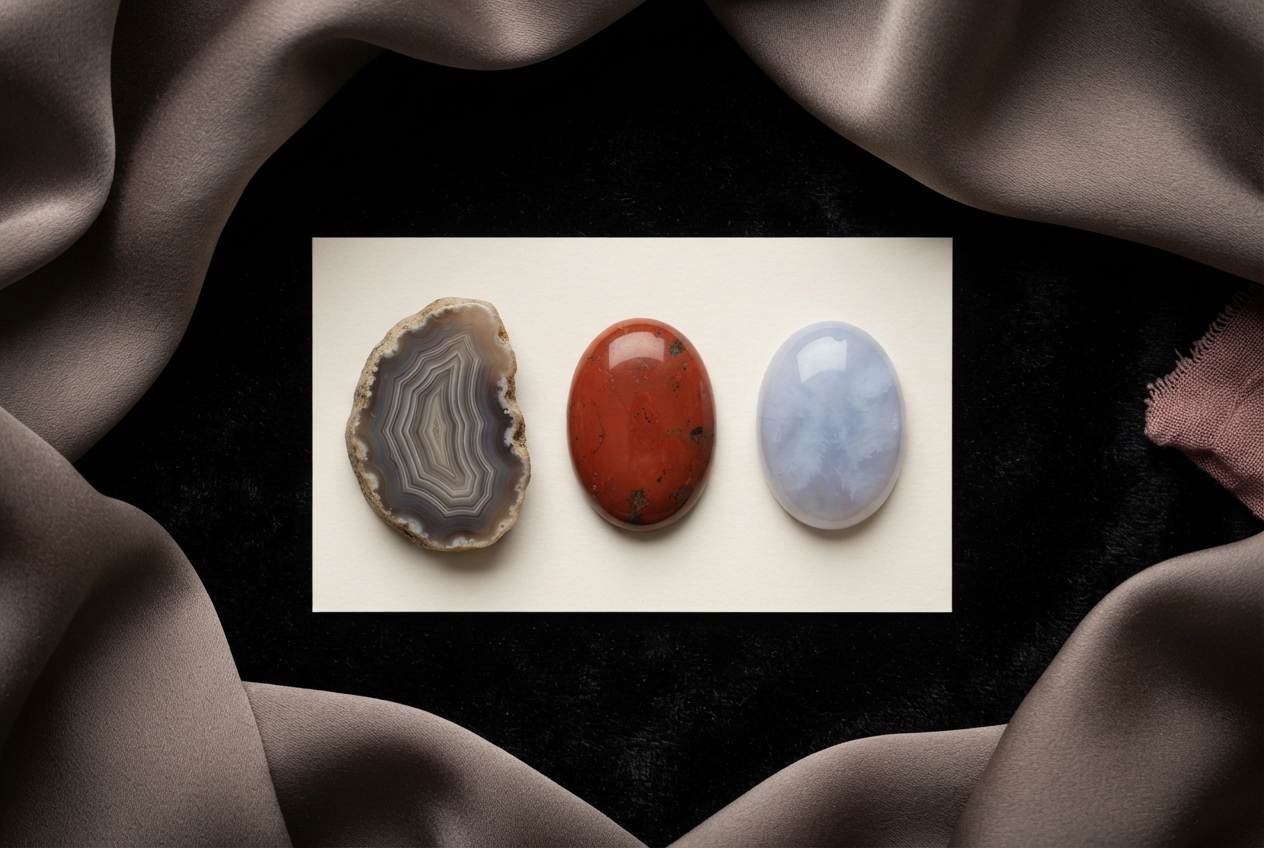
Three pieces on a white card
| What to look at | Banded agate slice | Red jasper cabochon | Blue chalcedony cabochon |
|---|---|---|---|
| Face in diffuse daylight | Curving bands follow one another, often around an irregular centre | Dense fields or mottling, with no obvious nested bands | Fairly even, softly cloudy colour |
| Thin edge with a light behind it | Some bands may transmit more light than others | Usually stays dark or transmits very little | May show an even, diffuse glow through the edge |
| A useful first label | Banded agate | Likely jasper | Likely unbanded chalcedony |
The cut matters. An agate cut across its growth bands can show concentric rings; another slice through the same stone can make the pattern look much less obvious. A thick chalcedony cabochon may show very little transmitted light where it domes. Compare edges of roughly the same thickness, and keep the beam behind the stone rather than letting it spill around your fingers and fool your eye.
The good exceptions are worth remembering
Moss agate is the exception that keeps the rule honest: its name is established even though its appeal is the plantlike pattern made by inclusions, not a set of concentric bands. And jasper can be striped or patchy. A stripe alone doesn’t establish agate. Ask whether the shapes repeat like layers of growth, whether they are irregular seams, and whether any part of the stone actually transmits light.
An intense pink or blue is another good reason to pause. Colour that appears concentrated in fractures or around a drill hole can suggest dye, especially in a bead or polished slice. That’s a reason to ask the seller about treatment, not a verdict from a single photograph. Likewise, a fancy name that ends in “jasper” tells you what to write in the trade-name field, not what to put under mineral identification.
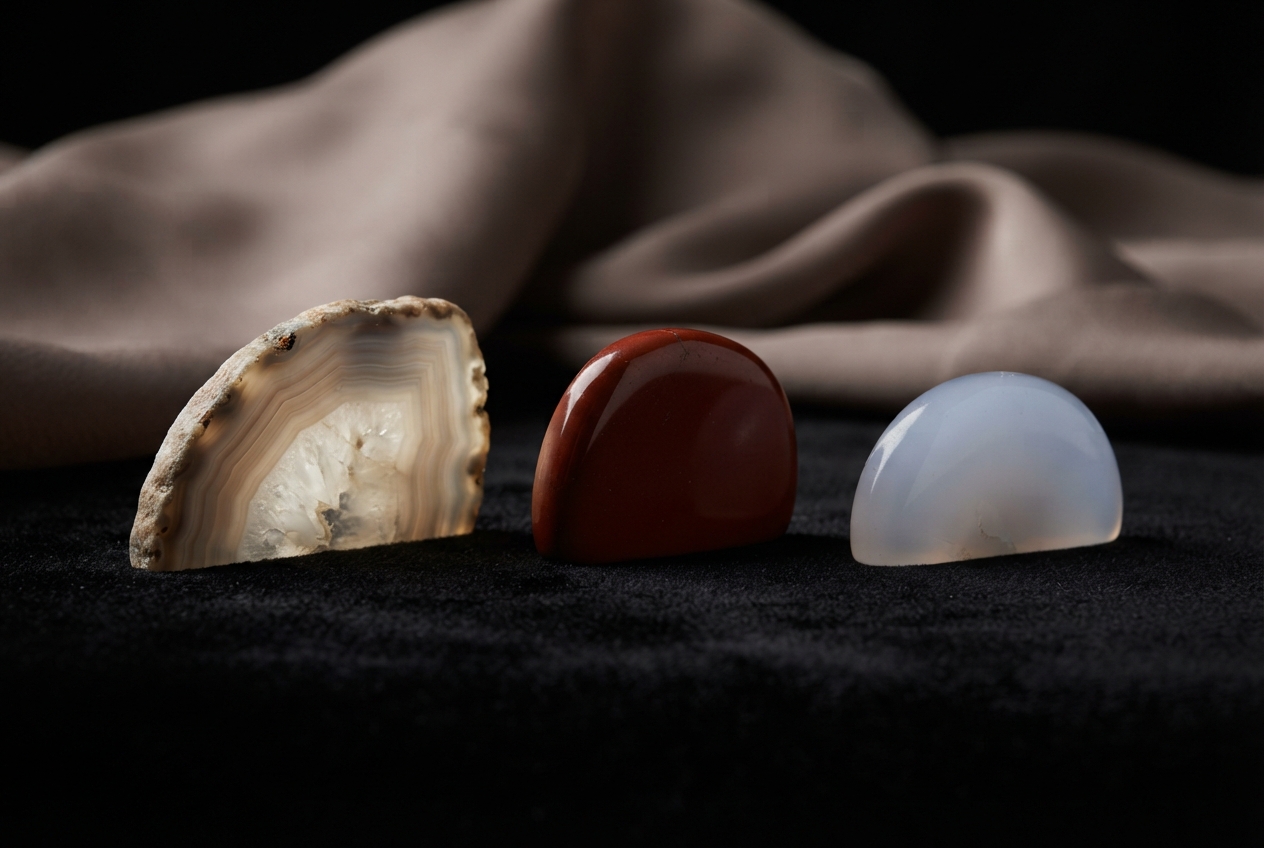
Give a doubtful specimen an honest label
If you’re keeping a study collection, photograph the face and thin edge under ordinary light, then take a second edge photograph with the light behind it. Note the trade name, the seller’s stated locality if there is one, and what you can actually see. “Sold as jasper; dark mottling, slightly translucent at one edge; identification provisional” is more useful to your future self than a confidently wrong label.
There’s no need to scratch a polished specimen to settle a debate that these materials might not settle by hardness anyway. Learn from pieces that show the differences clearly, then revisit the awkward ones. The awkward ones are usually where you discover what a shop name can and can’t tell you.