Dream Books and Lucky Numbers: Mother Shipton
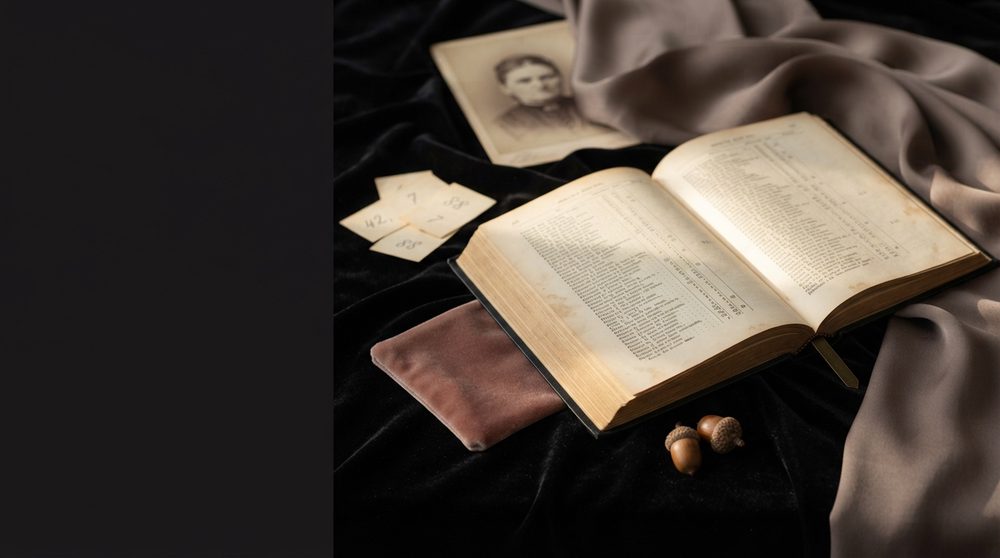
You dream of someone you haven’t seen in years. At breakfast, you’re left with the feeling that you should write to them.
The Mother Shipton dream book offers a brisker answer: they’ll return. It also gives you two numbers, 4 and 11.
Move down the page to “Acorn” and the prospect changes to poverty, accompanied by 7 and 88. You don’t have to wonder whether the acorn was beautiful, or whether you picked it up. The book has already decided which part of your night matters.
A late nineteenth-century Mother Shipton fortune teller and dream book does two things with each little entry. It makes a dream legible by giving it a heading, then makes that heading portable by turning it into numbers a reader might use in a lottery.
You can carry 4 and 11 out of the house more easily than a lingering feeling about someone who disappeared from your life.
What fits on a line
The book’s category for “Air” is more observant than its entry for “Acorn.” Clear air promises fortune, fog brings sorrow and pleasantly scented air points towards success in love. The conditions change, the interpretation changes, and the entry still ends in 42.
The number isn’t there to capture the difference between the three dreams. It’s there to make the entry actionable in the same way as all the other entries.
“Activity” has another twist. The dreamer is very busy; the book reads the bustle as a warning about losses through negligence and gives 10, 11 and 76. Notice that 11 also belongs to “Absence.”
The number doesn’t keep the meanings distinct. There’s no need to invent a secret principle that makes an absent person and a careless worker versions of the same symbol. Read as a printed object, the jumble is part of the interest.
Mother Shipton is the name on the cover, not a reason to treat the book as the recovered notebook of a historical seer. The collection packages dream interpretation alongside other forms of fortune-telling, including Napoleon’s Oraculum. A famous name makes a good invitation to open a book. It doesn’t tell you who devised the numbers or how old each line is.
What a lookup lets you stop doing
Imagine taking the same dream about the absent friend to your own journal. Was the friend absent in the dream, or were they there as if no time had passed? Did you wake pleased, guilty or relieved? The historic entry is fun to read precisely because it ignores those differences. As a practical aid to reflecting on a dream, that’s also its limitation.
Try making two entries the next time a dream sticks. First, give it the shortest possible heading, the way a dream-book compiler might: “Absent friend.” Then write one sentence that the heading leaves out: “We were both pretending we didn’t recognise each other.” If you look up the image, record the printed interpretation separately. Now you have three things to compare instead of one borrowed verdict.
The old book can still be a sharply entertaining reading companion. Let its certainty surprise you. Let its leaps show you what editors and readers were willing to make of a dream. Just don’t ask the number to prove the dream meant anything in particular. The number is the neatest thing on the page, and it is usually the least revealing part of the story.