Temperance
Overview
Temperance is the card of proportion under working conditions. The word has drifted toward abstinence in ordinary use; the operative sense here is metallurgical and alchemical — tempering, the controlled combination of unlike materials to produce something with properties neither had alone. The card describes a ratio, and ratios have to be maintained.
It follows Death in the sequence, and the placement is deliberate. After a definitive ending, the practitioner is left holding components rather than a finished arrangement, and the question becomes how much of each to use. Temperance is the least dramatic and most technical of the trumps.
Structure & symbol
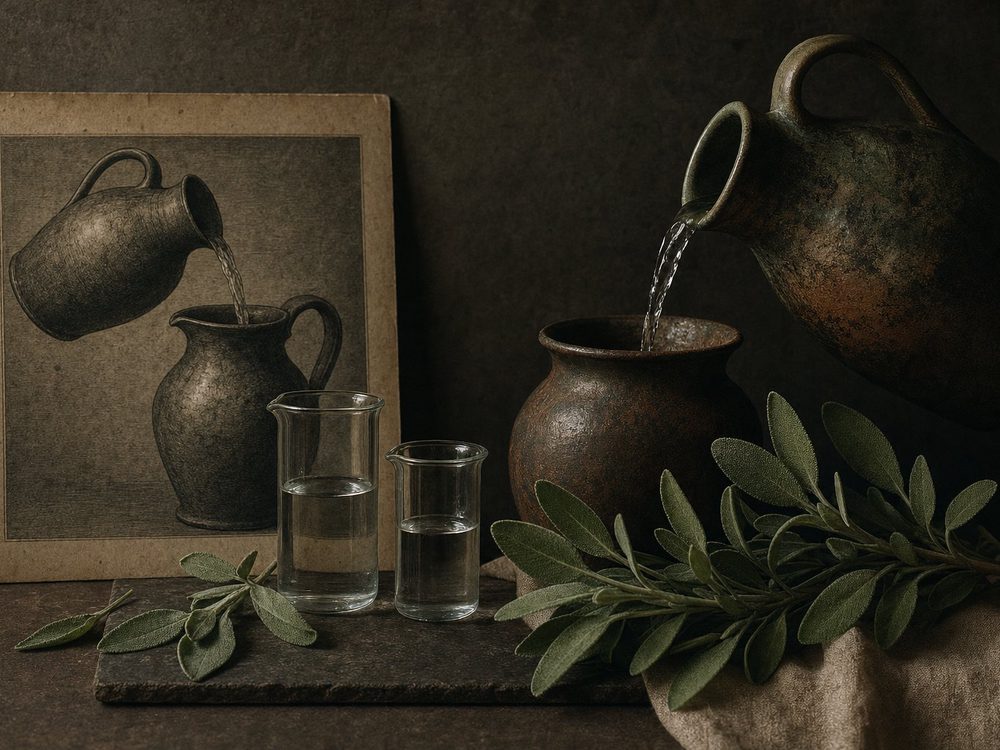
A winged figure stands with one foot on land and one in a pool, pouring liquid between two cups held at an angle at which no ordinary fluid would transfer. Behind, a path runs between two hills toward a low crown of light. Irises grow at the water’s edge; a solar emblem sits on the figure’s brow.
Two details define the reading. The stance across land and water fixes the card as a working posture rather than a resting one — the balance is being held, not achieved. And the impossible pour is a statement about method: the transfer succeeds because it is controlled, not because the conditions are favourable. Note also that the path leads somewhere specific. Temperance is not moderation as an end; it is moderation as the only way to cover distance.
A ratio is not a resting point. It is a thing you correct, continuously, or lose.
Upright meaning
Upright, Temperance indicates a situation that is being handled correctly by adjustment rather than by decision. Neither of the two available extremes will serve, and the practitioner’s task is to identify the two materials in play and the current ratio between them — effort and rest, candour and discretion, spending and holding, one person’s pace and another’s.
The card tends to appear when a querent is looking for a single decisive move. Its answer is that no single move exists and that the situation is tractable anyway, at the cost of ongoing attention. Note that tempering produces a material with properties neither component had: the outcome is genuinely new, not a compromise between two known states.
- Proportion held actively, not settled once
- Two unlike materials combined to make a third
- Progress by adjustment rather than by decision
- Sustainable pace over decisive action
Reversed meaning
Reversed, Temperance describes a ratio that has drifted while the practitioner continued to believe it was being held. The pour has not stopped; it has stopped being measured. Read for the specific overweighted component — the reversal is diagnostic and almost always names one side clearly if the two materials have been correctly identified. The drift is almost always toward whichever component is cheaper in the short term — more effort, less rest; more candour, less discretion — which makes the direction of error predictable once the pair has been named.
A secondary reading is false moderation: the querent is splitting every difference to avoid choosing, and calling the paralysis balance. Distinguish by movement. If the path is being covered, read drift; if nothing is progressing, read avoidance.
Correspondences
| Astrology | Sagittarius |
|---|---|
| Element | Fire |
| Hebrew letter | Samekh |
| Numerology | 14 — 1 + 4 = 5 |
| Path | Tiphareth → Yesod |
| Colour | Amber, pale blue |
Positional reading
In the past position, Temperance indicates a period of competent maintenance and usually explains why the present is stable rather than why it is stuck. In the present it asks the two-part question this card always asks: which materials, at what ratio, and when was it last checked. In the future it is a method instruction rather than an outcome — the matter will resolve by sustained adjustment, and any attempt at a single decisive move will cost more than it saves.
Beside The Tower, Temperance is the most favourable adjacency available to that card: the collapse is being managed by proportion instead of force. Beside The Star, the two reinforce each other into a clear programme — corrected orientation plus a maintainable rate of work. Beside The Sun, read the proportion as sound enough to be shown and inspected; beside The Moon, withhold the ratio until the materials themselves have been identified.